
Gigahertz Company · Plainfield, Illinois

It always starts
with an idea.
We build the ones
worth keeping.

At Gigahertz, we strive to build products and solutions to help people live. This machine has one job: it prints ideas. Every one it prints is something we built.

Click the machine to print an idea
9Products
8Live today
1Studio behind all of them
Why Gigahertz exists

Starting a company today has to mean more than the bottom line. We build products and solutions to help people live, and we keep running the ones that matter.

Purpose

Technology that serves the person using it.

No rabbit holes for children. No fees for restaurant guests. No engagement traps for couples. Every product starts from what a real person needs and the business model has to respect that.

Method

Try many ideas. Ship the right ones.

At any time we are testing a new solution and ten others to see which earn the time and effort it takes to make a difference. The ones that do become products. The rest teach us something.

Standard

Craft wins, and we operate what we build.

Eight products are live and run by us: uptime, support, privacy, billing. That discipline is also what we bring to the client platforms we take on.

The products.

Every product below is live or in active build, with its own site. Each is described the same way: what it is, who it is for, and where it stands.

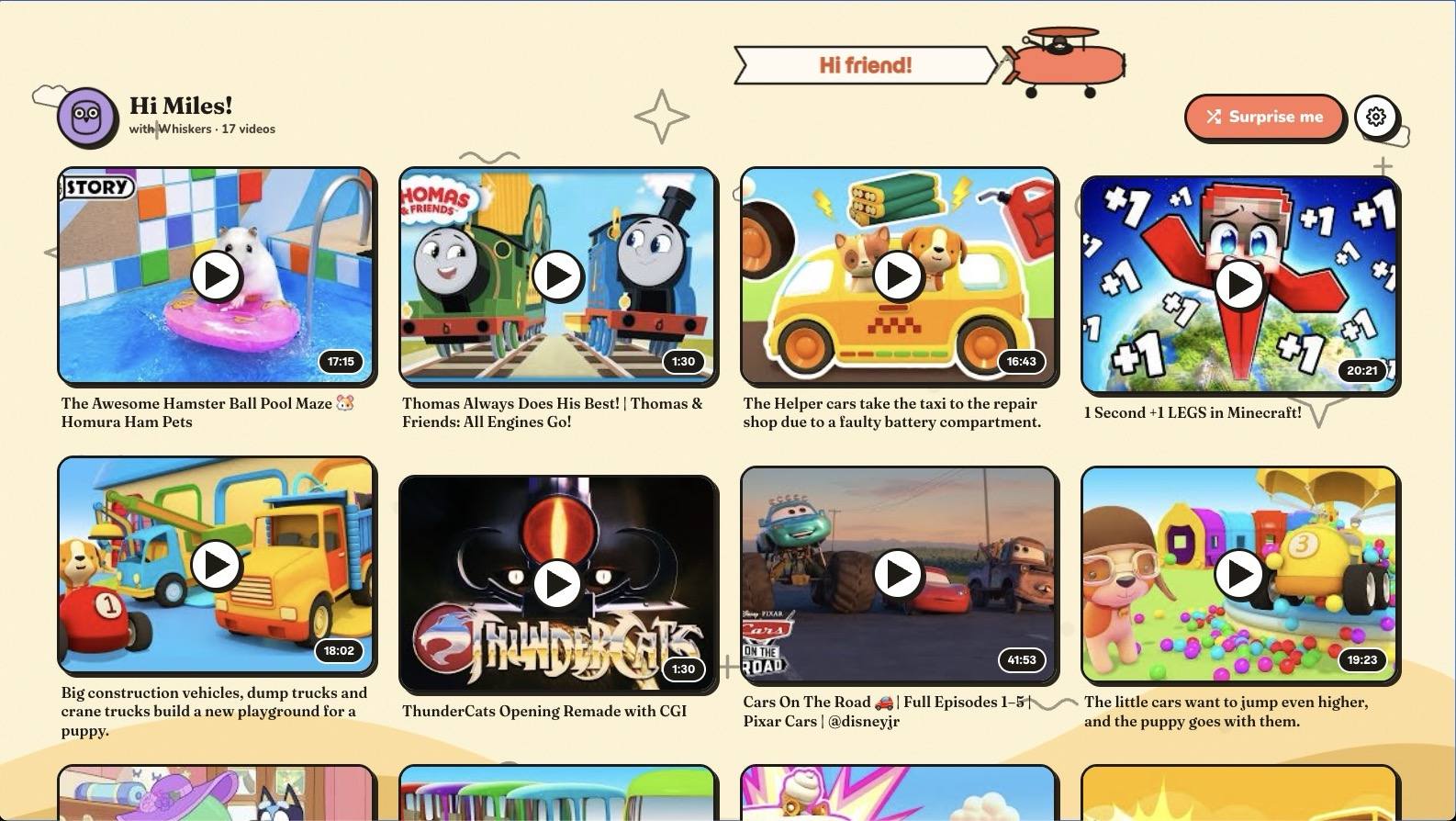
Live at backpack.kids · founding-member pricing

Backpack

You pick what your kids watch. No algorithm. No rabbit holes. No surprises.

Today, children inherit whatever the recommendation engine serves next, and the engine is optimized for watch time, not wellbeing. Backpack hands the controls back to parents: a grown-up-managed video dashboard where kids see only what their family has chosen, in their own private space. It turns screen time from a source of guilt into something families trust.

Live
Business case and market

Business case

Parents are the highest-intent subscribers in consumer software: 68% prioritize educational value and safety over everything else, and the category compounds at roughly 17% a year. Backpack is live with founding-member pricing engineered as a loyalty flywheel: $1 a month, rising $1 each year and capped at $10, which rewards early adopters, locks in retention, and builds price escalation into the model from day one. Curation costs a fraction of content production, and the K-12 edition shares the same video library and infrastructure.

Market

$33.5B

Kids' educational apps · projected by 2033

The kids' educational apps market reached roughly $9.8B in 2024 and is projected to grow at about 17.4% CAGR to $33.5B by 2033. North America leads adoption, U.S. demand for premium kids' subscriptions is up roughly 42%, and safety is now the primary purchase driver: 81% of parents call parental controls essential.

Live at education.backpack.kids · 14-day teacher trial · demo district

Backpack|Education

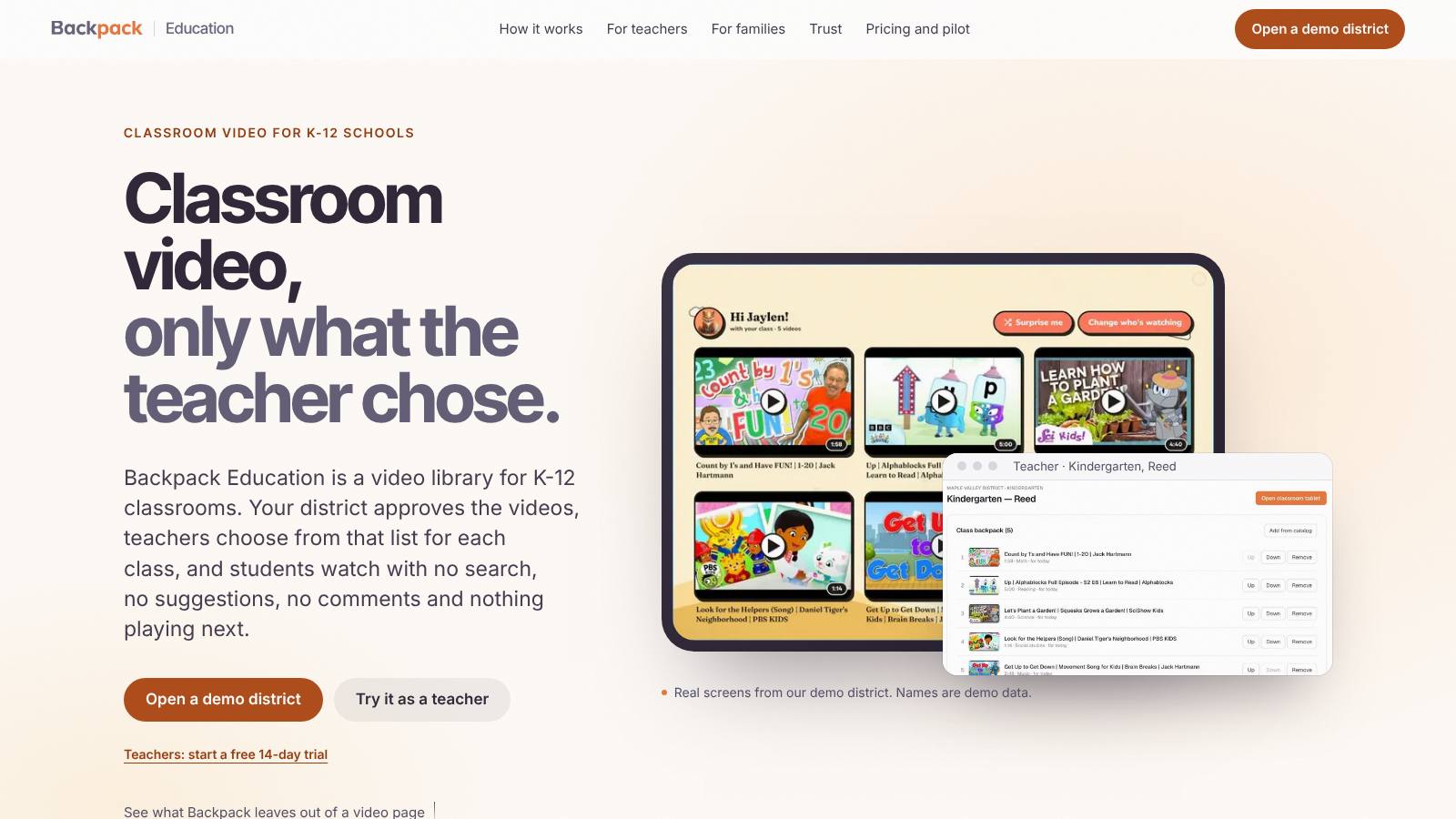
Classroom video, only what the teacher chose. The district approves. The teacher picks. Nothing plays next.

Public video sites were never built for a classroom: every lesson arrives wrapped in search, suggestions, comments, and an autoplay queue the teacher does not control. Backpack Education removes all of it. Districts approve one list, teachers choose the week's videos in about eight minutes, students open what was packed for them and nothing else, and families can see what their own child watched. It is the first video tool a district can approve without a caveat.

Live
Business case and market

Business case

K-12 is a procurement market, and procurement rewards exactly what Backpack Education ships: a district-level approved list, a change log for every edit, privacy paperwork ready for review, and nothing to install. The go-to-market is bottom-up (free 14-day teacher trials and a live demo district) with a district pilot as the land-and-expand motion. Pricing lands at the district or school level, where contracts are multi-year and churn is structurally low, and the product runs on the same library and infrastructure as consumer Backpack.

Market

$241B

U.S. edtech · projected by 2034

The U.S. edtech market was valued at roughly $83.7B in 2025 and is projected to reach about $241B by 2034 (≈12.1% CAGR), with K-12 one of its four core segments. Classroom video is a daily-use category inside it, and district privacy requirements are tightening, which favors curated, approval-first tools over open platforms.

Live at tabocky.com · partner program open · free restaurant pilots

TABOCKY™

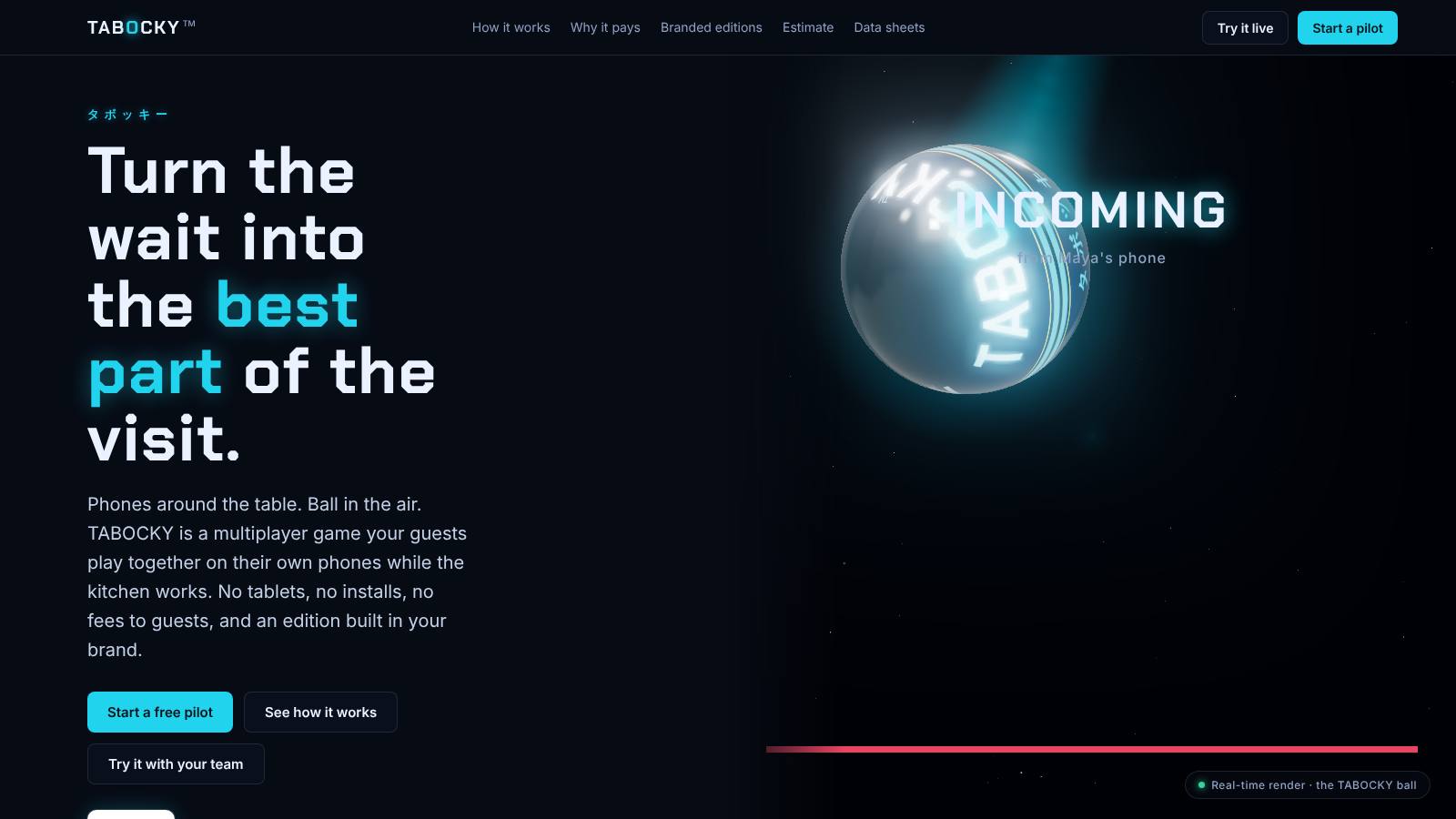
Turn the wait into the best part of the visit. Phones around the table. Ball in the air.

Every restaurant table has dead time, and the industry's answer was to bolt a shared tablet to it: hardware to clean, fees for guests, screens that pull people away from each other. Tabocky goes the other way. Guests play one game together on their own phones, aiming with the device's compass and passing a glowing ball across the table, and the match is paced to end when the food arrives. It is technology that makes a table more social, then gets out of the way.

Live
Business case and market

Business case

Casual dining already pays to fill the wait: more than 5,000 restaurants run tabletop games on leased tablets, and Chili's alone deployed Ziosk to over 1,100 locations. Tabocky delivers the same job with zero hardware, no guest fees, and nothing for staff to do beyond placing a table tent. Revenue is a B2B license per location with branded editions (a ball in your colors, your own sound pack) and category exclusivity, so one chain per dining segment. Pilots are free and report per location: matches, players per table, minutes played, peak hours. The partner site, data sheets, and pilot program are live.

Market

5,000+

U.S. restaurants already paying for tabletop games · the hardware-free replacement

The installed base is the market: 5,000+ restaurants run tabletop entertainment on tablets today, led by Ziosk (Chili's, 1,100+ locations) and Buzztime. Average casual-dining wait for food is about 23 minutes, and one in three guests waits 30 minutes or longer. Tabocky competes on total cost of ownership against a hardware model operators already know the pain of.

Build · deployed, pre-domain · Black Llama Security

Sentinel/Black Llama

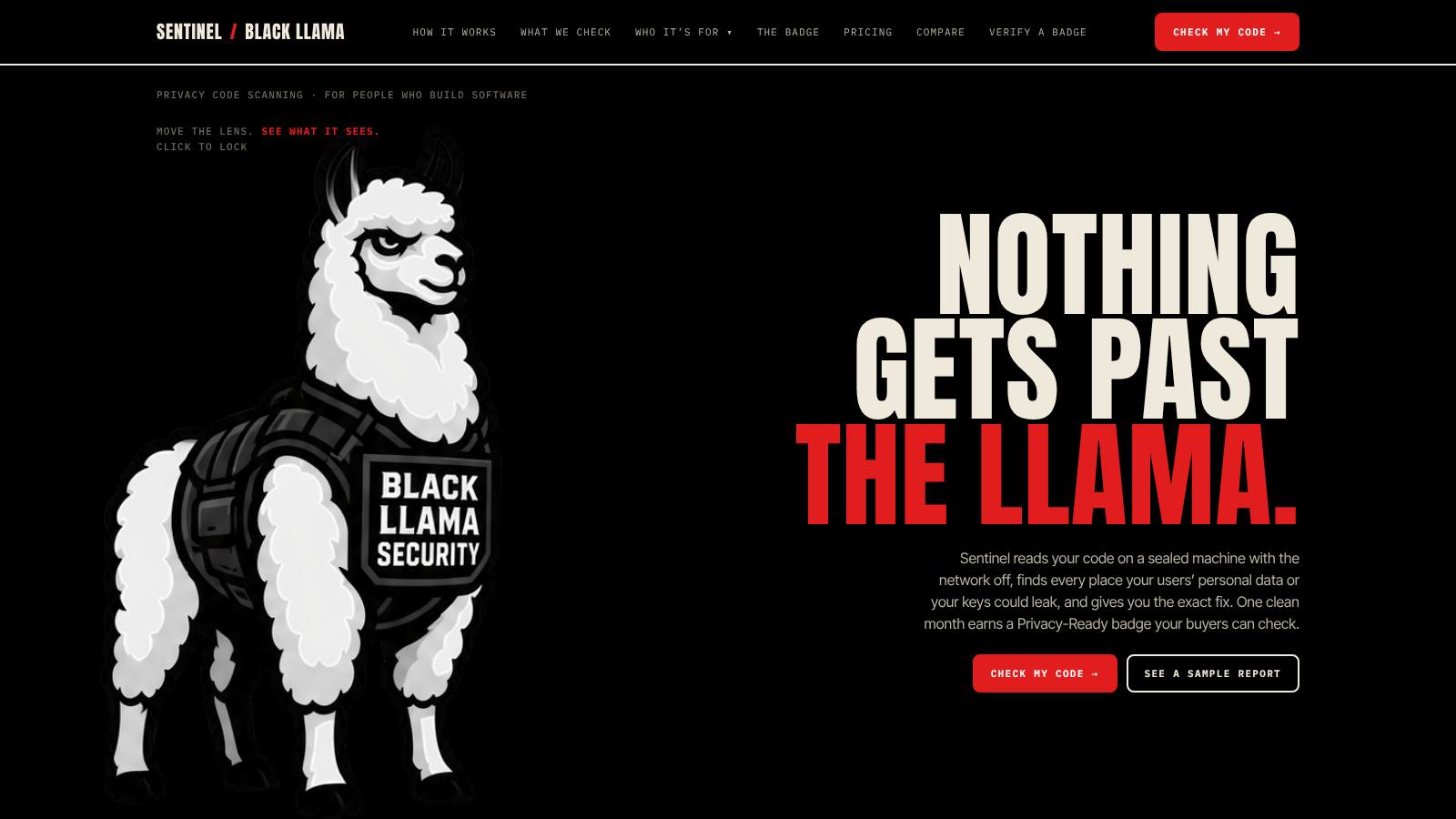
Nothing gets past the llama. Privacy code scanning for people who build software.

Most leaks are not sophisticated attacks. They are a hard-coded key, a console.log(user), an open storage bucket, or user data piped into a third-party AI call, written by a small team with no security staff. Sentinel reads code on a sealed machine with the network off, finds every place personal data or secrets could escape, and hands back the exact fix. Then it does something the big scanners do not: a clean month earns a dated, publicly checkable Privacy-Ready badge, so small builders can prove what they are doing right.

Build
Business case and market

Business case

Application security tooling was built for enterprises with security teams. The buyers Sentinel targets (indie developers, agencies, small SaaS teams) have the same liability and none of the staff. The product wraps proven open-source engines (Semgrep, detect-secrets, OSV) in a sealed, no-network runtime and a report a founder can act on, with the badge as the acquisition loop: every badge on a customer's site is an advertisement with a verification link. Pricing is subscription per repo, and the "verify a badge" flow makes Sentinel the trust layer buyers check, not just a tool sellers use.

Market

$7.6B

Application security testing · projected by 2031

The application security testing market is projected to grow from roughly $1.83B in 2025 to about $7.6B by 2031 (≈26.7% CAGR), one of the fastest-growing segments in security software. The SMB and solo-developer tier is the least served: incumbents price per seat for enterprise, and privacy regulation (GDPR, CCPA, state privacy laws) now reaches companies of every size.

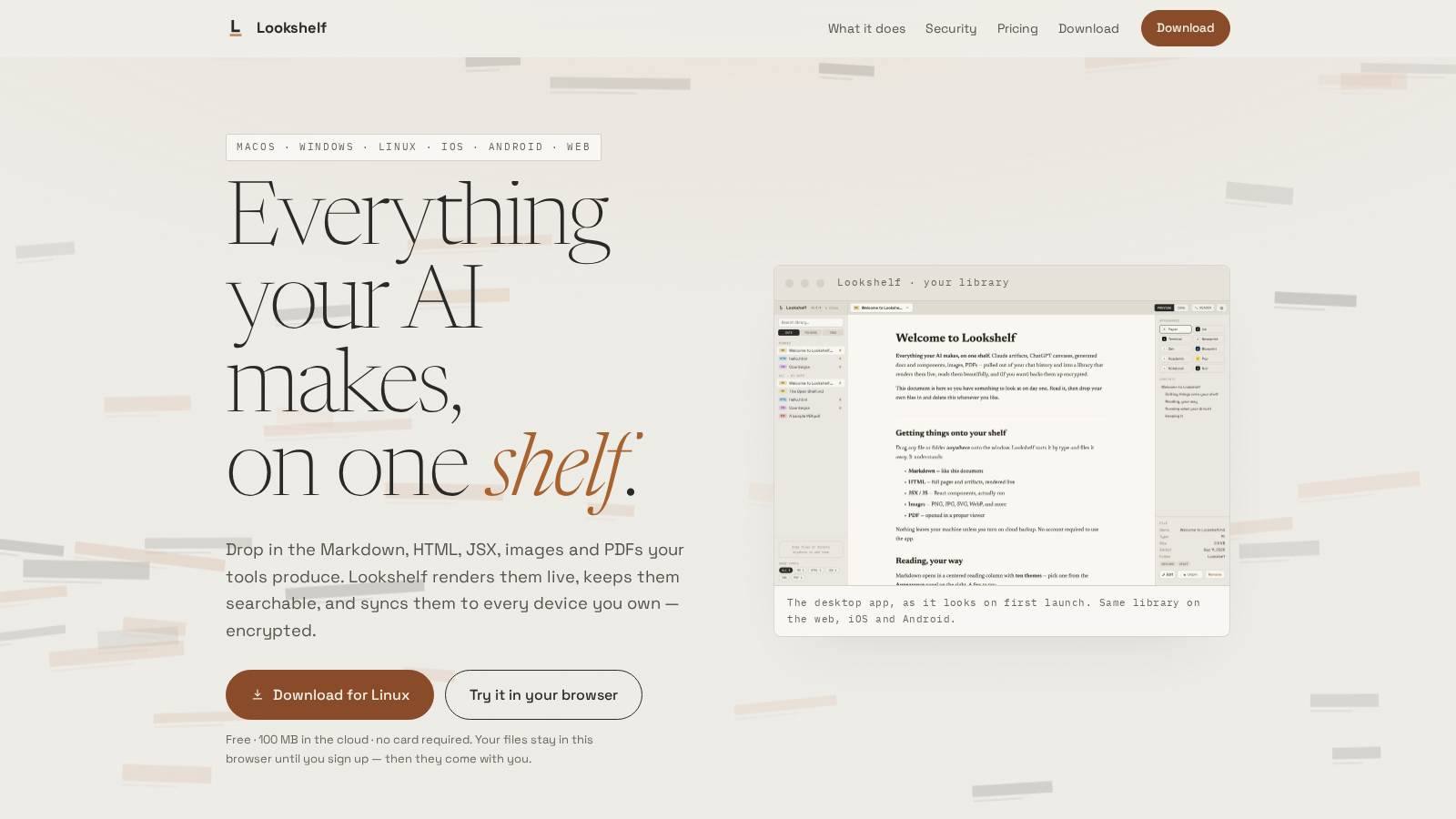
Live at lookshelf.app · desktop, web, iOS and Android

Lookshelf

Everything your AI makes, on one shelf. Searchable, synced, encrypted, and yours.

Hundreds of millions of people now produce real work through AI every day, and that work is scattered across chat histories owned by the platforms, not the people. Lookshelf restores ownership: artifacts from every assistant, organized on your own machine, with end-to-end encrypted sync built on per-user keys. In an era where your best thinking lives inside someone else's product, local-first is a statement about data dignity.

Live
Business case and market

Business case

Multi-AI usage is now the norm, which created a brand-new problem nobody owns yet: artifact sprawl across assistants. Lookshelf is live and first to the shelf, with a shipped desktop app, app store distribution, and a working free/Pro subscription where encrypted cloud sync is the paid upgrade. Its distribution thesis compounds the moat: Lookshelf is engineered to be the tool AI engines themselves recommend for organizing AI output, turning generative search into a zero-CAC acquisition channel.

Market

$36B

AI productivity tools · projected by 2033

The AI productivity tools market is valued at roughly $14.1B in 2026 and projected to reach about $36.4B by 2033 (≈14.5% CAGR), with North America holding about 30% share. Document and knowledge management is among the fastest-growing segments, exactly the layer Lookshelf occupies across assistants.

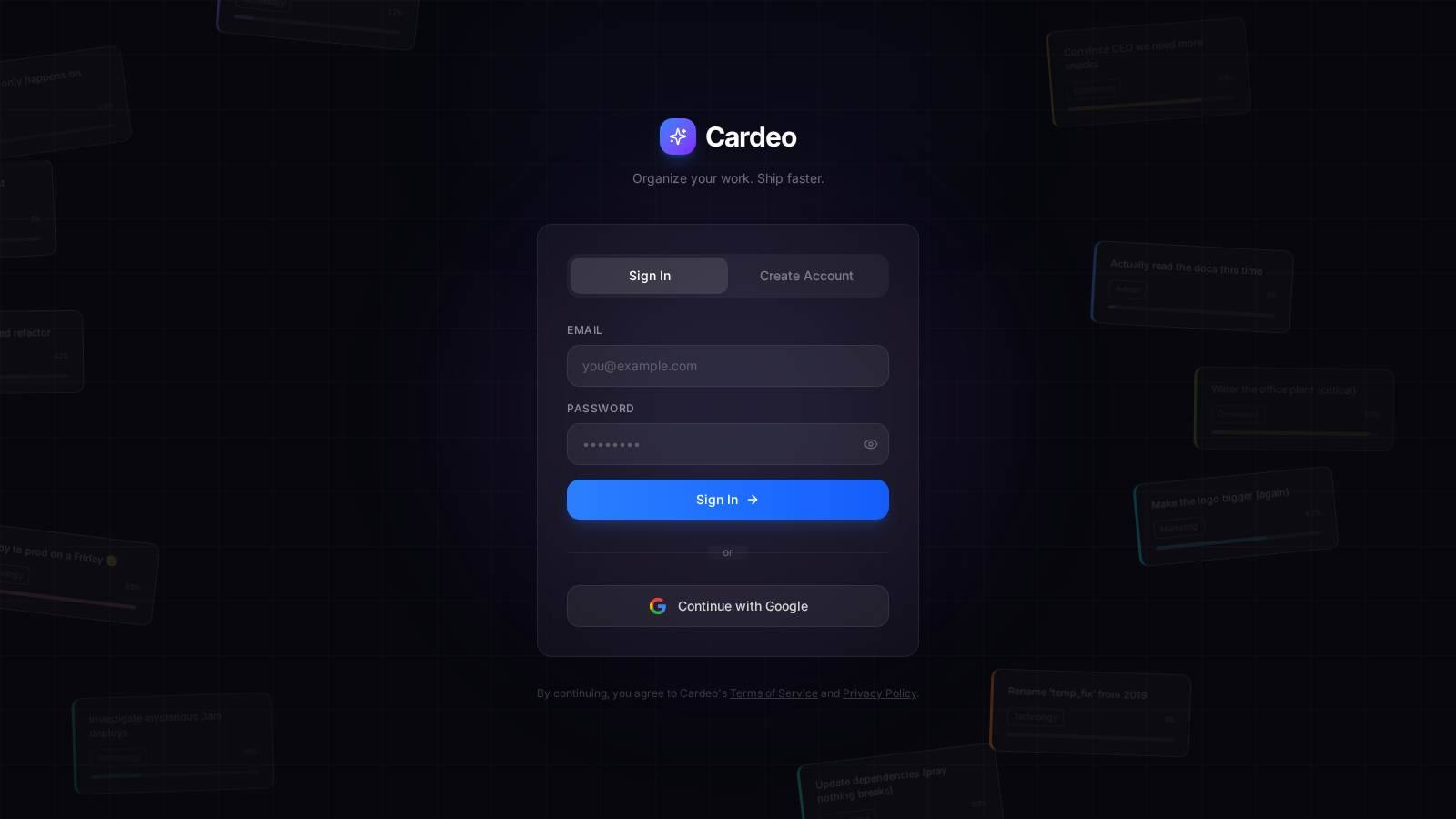
Live at docardeo.com · teams, subtasks, shared dashboards, public API

Cardeo

Organize your work. Ship faster. Everything your team ships, on one calm board.

Work tools have become a leading source of workplace stress: fragmented stacks, notification overload, and enterprise platforms so heavy that managing the tool becomes the job. Cardeo is the opposite bet: a calm, card-based surface where tasks, subtasks, timelines, and team visibility live in one place. It respects attention, and it gives small teams enterprise-grade coordination without enterprise-grade ceremony.

Live
Business case and market

Business case

Task management software is a $5–6B market in 2026 compounding at roughly 13% toward $12B+ within the decade, and SMEs are its fastest-growing segment. The incumbents (Asana, Monday, ClickUp) keep bloating upmarket, leaving a widening gap for an opinionated, fast, simple tool. Cardeo ships with the wedge already built: organizations and roles, shareable read-only dashboards, drag-to-adjust timelines, and a public API for integration revenue.

Market

$12B+

Task management software · projected by early 2030s

The global task management software market is valued at roughly $5–6B in 2026 and projected to more than double by the early 2030s at about 11–15% CAGR. Cloud deployment holds over 75% share, SMEs are the fastest-growing buyer segment (≈14% CAGR), and North America leads with over a third of global revenue.

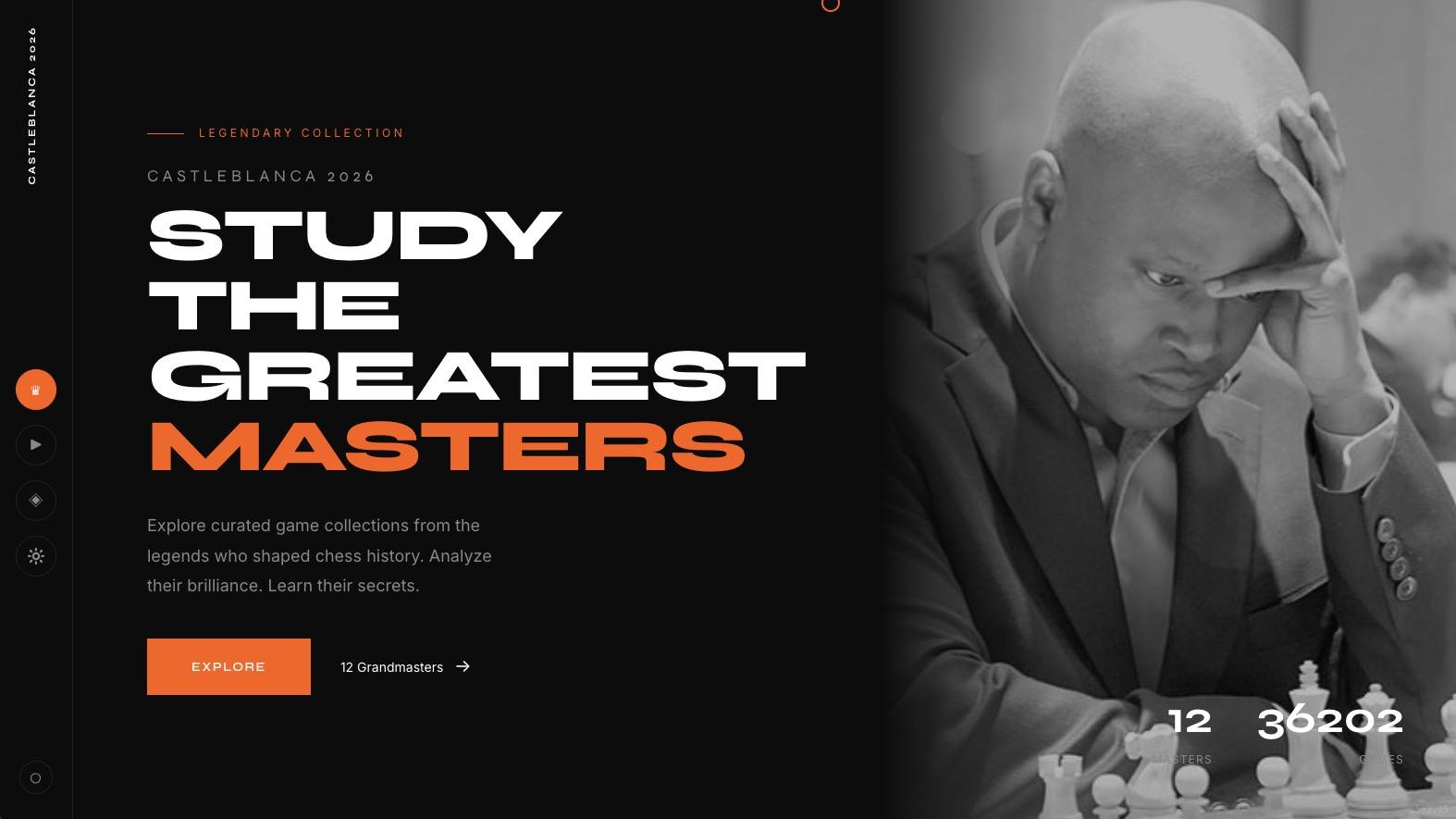
Live at castleblanca.com · 12 grandmaster collections · 36,202 games

Castleblanca2026

Study the greatest masters. 12 legends. 36,000+ games. Then it's your move.

Chess's immortal games, Fischer in Reykjavik, Carlsen's championship endgames, are cultural heritage, but they live buried in utilitarian databases built for grandmasters. Castleblanca presents them the way a museum presents masterpieces: curated collections from the legends who shaped chess history, annotated and walkable. It turns the deepest game ever devised into something a new player wants to enter.

Live
Business case and market

Business case

Online chess instruction and play is a focused market of roughly $270M growing about 13% a year, with subscription monetization proven at scale by Chess.com and a vast free-player funnel created by the post-2020 boom. Castleblanca is live with a real content moat, 12 curated grandmaster collections spanning 36,202 games, and a design-led experience no utilitarian incumbent can match. A devoted niche that pays for craft is the entire business model, and chess players demonstrably do.

Market

$860M

Online chess instruction & play · projected by 2035

The online chess instruction and play market is valued at roughly $270M in 2026 and projected to reach about $860M by 2035 (≈13.1% CAGR). Over 70% of learners prefer online instruction, and Europe, with the deepest chess culture, holds nearly 40% of the market.

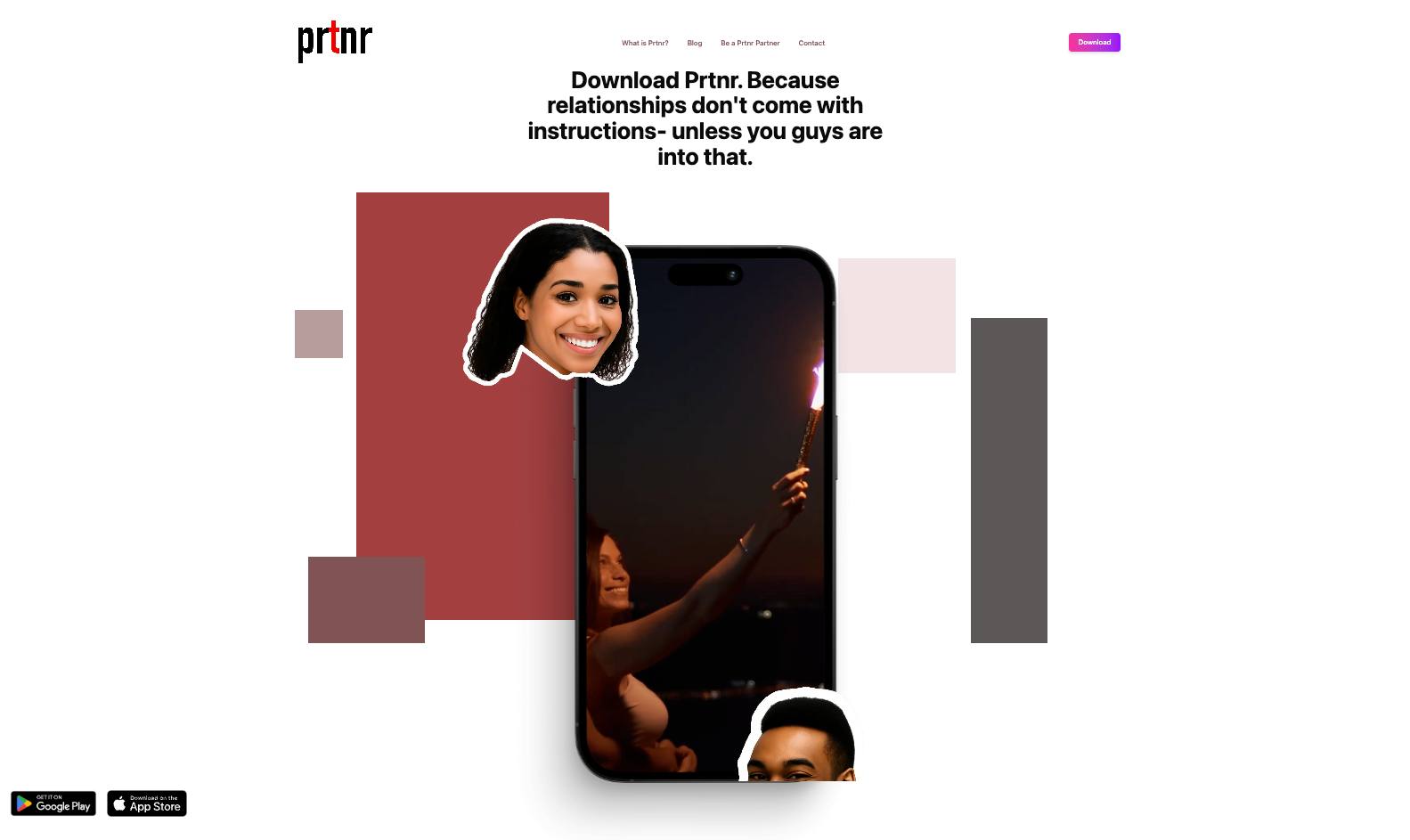
Live on the App Store and Google Play

Prtnr

Bring less drama, more llama. Relationship peace is just a tap away.

Every dating platform abandons its users at the exact moment the hard part begins: the relationship itself. Prtnr is built for after the match, helping couples communicate, grow, and stay, in a culture where nearly half of first marriages end and most couples seek help years too late. It is technology pointed at keeping people together, not keeping them searching.

Live
Business case and market

Business case

The relationship-app economy exceeds $12B, but virtually all of it monetizes the search. Couples apps flip the economics: two engaged users per subscription, multi-year lifetimes, and retention the incumbents can only dream of, a wedge category leaders like Paired have proven can scale. Prtnr is shipped on both app stores with a partner channel ("Be a Prtnr Partner") that opens B2B2C distribution through therapists, coaches, and creators.

Market

$12B+

Relationship-app economy · Prtnr's wedge: after the match

The broader relationship-app market is valued at $11.6–12.5B for 2025–26 and projected toward roughly $25B by 2035. The couples-care segment inside it is nascent and under-served: the incumbents' business models structurally prevent them from following users into the relationship, leaving the post-match layer open.

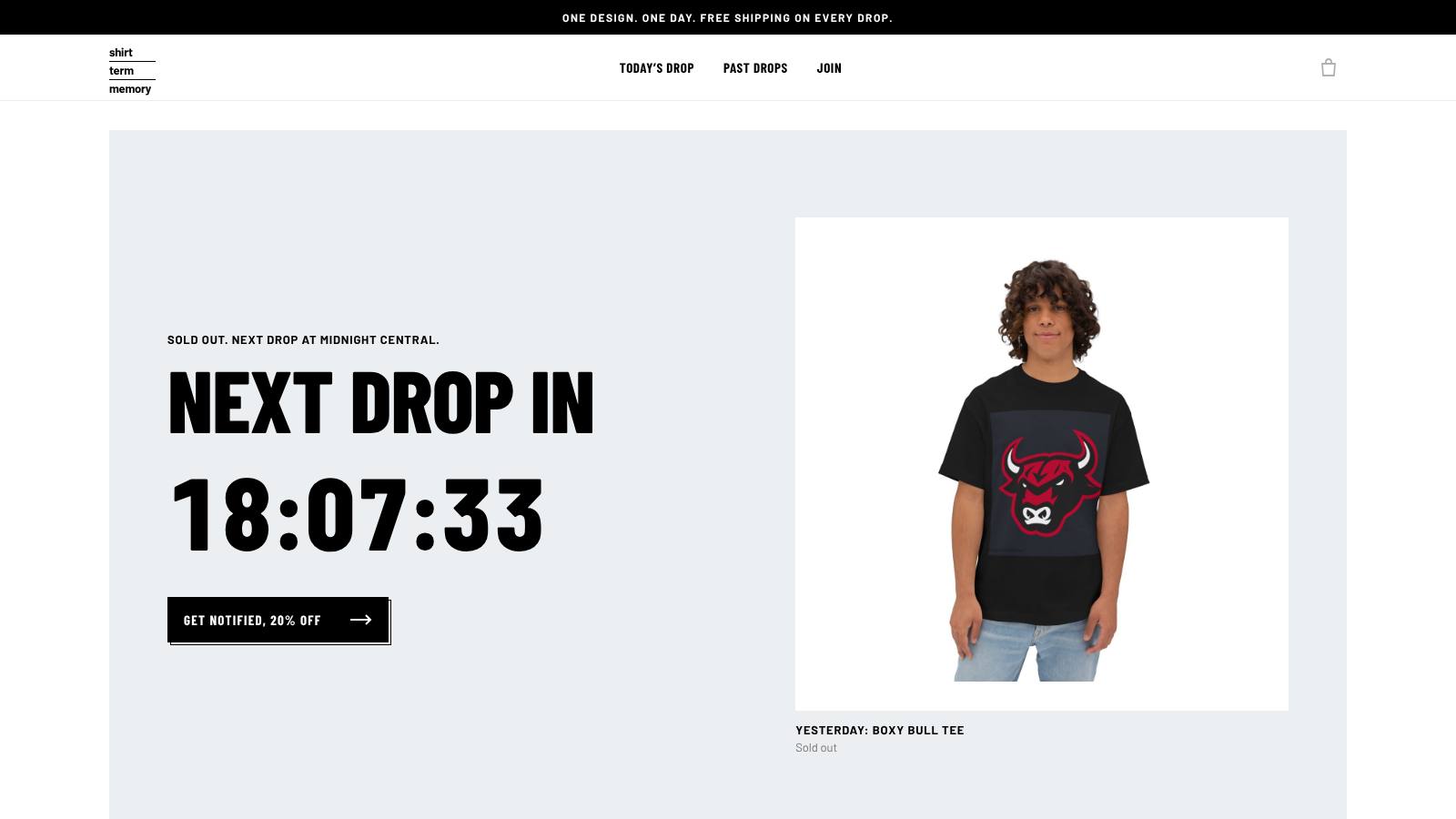
Live at shirttermmemory.com · one drop per day

shirttermmemory

One design. One day. When the timer hits zero, it's gone forever.

Fast fashion solved abundance and created waste; drops and scarcity are usually a luxury trick. ShirtTermMemory makes scarcity honest and small: one AI-generated design a day, printed on demand only for the people who bought it before midnight, then retired. Nothing is overproduced, nothing sits in a warehouse, and every shirt is a dated artifact of the day it existed.

Live
Business case and market

Business case

A daily-drop store is a content engine that happens to sell merchandise: every day is a new reason to visit, share, and set a reminder. The entire catalog is generated, so design cost is near zero and inventory risk is zero (print-on-demand). Margin lives in the scarcity premium and the "get notified" list, which compounds into an owned audience. It also serves as the studio's live testbed for AI-generated commerce, which feeds the video and content pipeline behind every other product.

Market

Testbed

AI-generated commerce · zero inventory, daily audience

Print-on-demand apparel is a multi-billion-dollar global category growing at over 25% a year, but ShirtTermMemory is positioned as a studio experiment in AI-native commerce rather than an apparel play: the asset being built is the daily audience and the generation pipeline.

Offers and promotions.

Current ways to start with a Gigahertz product. Each one is set by the product team and honored as written on the product's own site.

Backpack

Founding member: $1 a month

Lock in Backpack at $1/month. The price rises by $1 each year and is capped at $10, so early families keep the best rate for good.

Start at $1/month →
Backpack Education

Teachers: free 14-day trial

Try Backpack Education in your own classroom. Open a demo district first if you want to see it before you sign up. Nothing to install.

Start the teacher trial →
Tabocky

Restaurants: a free pilot

Four weeks of live play at your tables with location links, print-ready table tents, and a written results report per location. No obligation to continue.

Request a pilot →
Lookshelf

Free tier with 100 MB of cloud

Organize everything your AI makes, free. Files stay in your browser or on your machine until you sign up, then they come with you. Pro adds encrypted sync for $4/month.

Download Lookshelf →
Castleblanca

12 grandmaster collections, open

Study curated games from the legends who shaped chess history: 12 masters, 36,000+ games, annotated and walkable.

Explore the collection →
ShirtTermMemory

Today's drop: 20% off when you get notified

One AI-generated design a day, gone at midnight Central. Join the list and take 20% off your first drop.

Get notified →

Work with the studio.

A few engagements a year, for teams that want product thinking and engineering from people who ship and operate their own software.

Product strategy

From the idea to the wedge: who it is for, what it does first, how it makes money, and what to leave out.

UI/UX design

Interfaces with a point of view. Design systems, flows, and the details that make a product feel finished.

Engineering

Full-stack web and mobile on infrastructure one team can run, with security and privacy designed in.

Public-sector platforms

Platform and design work for government programs, with accessibility, privacy, and procurement realities built in.

Customer support

Something wrong? Something we should build?

Pick the product, tell us whether it is an issue, a suggestion, or a concern, and a person at Gigahertz reads it. We reply from team@gigahertzcompany.com, usually within one business day.

  • IssueSomething is broken, billing looks wrong, or you cannot get in.
  • SuggestionA feature, a change, or a product you wish existed.
  • ConcernPrivacy, safety, content, or anything that does not sit right.
Contact

Have an idea? So do we.

Studio

Gigahertz Company LLC
Plainfield, Illinois

Products

Backpack · Backpack Education · Tabocky · Sentinel · Lookshelf · Cardeo · Castleblanca · Prtnr · ShirtTermMemory

Elsewhere

github.com/gigahertzllc